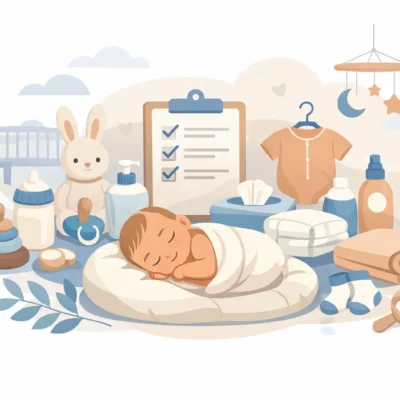
The middle-of-the-night feed is over, your baby’s eyelids are heavy, and you are exhausted too. This is the moment when an infant sleep safety guide matters most: not as another long list to memorize, but as a few clear choices you can repeat every time your baby sleeps.
Safe sleep guidance can feel strict because babies sleep often, in short stretches, and not always where we planned. Still, a simple sleep setup gives your family something valuable during an intense season: a dependable routine that protects your baby while giving you fewer decisions to make at 2 a.m.
Infant Sleep Safety Guide: The Safer Sleep Setup
For every sleep, including naps, place your baby on their back on a firm, flat, non-inclined sleep surface. A safety-approved crib, bassinet, or play yard with a tightly fitted sheet is designed for this purpose. The sleep area should be empty except for your baby.
That means no loose blankets, pillows, stuffed animals, bumper pads, sleep positioners, nests, wedges, or toys. These items can look soft and comforting, but they may cover a baby’s face or create a position that makes breathing harder. A bare sleep space is not cold or uncaring. It is one of the most caring choices you can make.
A practical visual check helps: if an item is not part of the mattress or the fitted sheet, remove it before putting your baby down. If you need warmth, choose a properly fitted wearable blanket or sleep sack rather than a loose blanket. Select one that fits your baby’s size and does not have a weighted design.
Why back sleeping stays the recommendation
Healthy babies should be placed on their backs for sleep, even if they can roll from back to tummy on their own. Once a baby can roll both ways independently, you do not need to turn them back over repeatedly. Continue placing them on their back at the beginning of every sleep and keep the crib free of loose items.
Some parents worry that a baby may spit up while lying on their back. For most healthy infants, back sleeping remains the recommended position because babies’ airway anatomy and protective reflexes help them clear normal spit-up. If your child has a medical condition that affects sleep positioning, ask your pediatrician for guidance tailored to your baby.
Share a Room, Not a Sleep Surface
Keeping your baby’s bassinet, crib, or play yard in your room makes nighttime feeding and checking easier. Room sharing is generally recommended for at least the first six months, and ideally through the first year when possible. Your baby is close enough for comfort, but has a separate, protected sleep surface.
Bed sharing may feel like the fastest way to settle a waking baby, especially during cluster feeding or after a difficult postpartum day. But adult beds are not designed for infant sleep. Soft mattresses, pillows, comforters, gaps near the wall or headboard, and another sleeping person can all create hazards.
Never sleep with a baby on a couch, recliner, or armchair. These spaces are particularly dangerous because babies can become trapped between cushions or against the adult’s body. If you are feeding in bed and feel yourself getting sleepy, return your baby to their own sleep space before you fall asleep. Preparing for that moment helps: keep the bassinet nearby, use a dim light, and place water, burp cloths, and feeding supplies within reach.
Make Clothing and Temperature Work for Sleep
Babies do not need hats indoors for sleep, and they should not be bundled under blankets. A good starting point is to dress your baby in about one more light layer than you are wearing comfortably in the same room. The right choice depends on your home’s temperature, your baby’s age, and the fabric.
Check your baby’s chest or the back of their neck rather than their hands and feet, which may feel cool even when their body temperature is fine. Sweating, hot skin, flushed cheeks, damp hair, rapid breathing, or a warm chest can signal overheating. Remove a layer and reassess.
Swaddling can calm some newborns, but it has rules. Always place a swaddled baby on their back, keep the swaddle snug around the chest but loose around the hips, and stop swaddling as soon as your baby shows signs of trying to roll. At that point, transition to an arms-free sleep sack. Never use weighted swaddles, weighted sleep sacks, or weighted blankets.
Separate Sleep From Baby Gear
A car seat, swing, bouncer, stroller, infant carrier, and lounger can be useful during awake time or travel, but they are not routine sleep spaces. Their angle can allow a young baby’s head to fall forward, which may interfere with breathing.
If your baby falls asleep in a car seat during a drive, that can happen. Once you arrive and can safely do so, move them to a firm, flat crib, bassinet, or play yard. The same approach applies when sleep happens in a swing, bouncer, or stroller. Convenience gear is helpful, but safe sleep should happen on a flat surface whenever possible.
Be cautious with products marketed as helping babies sleep longer, preventing rolling, or holding a baby in a specific position. Marketing language can sound reassuring without making a product appropriate for unsupervised sleep. When in doubt, follow the product’s instructions, check for safety recalls, and choose the simple setup recommended by your pediatrician.
Build a Routine That Works on Tired Days
The best safe sleep routine is one you can maintain when you are depleted. Keep the crib or bassinet ready with only its fitted sheet. Place a clean sleep sack nearby. Set up a low light for overnight care so you do not need to improvise in a dark room.
A short sequence can become a useful family habit: feed your baby, burp if needed, change the diaper when appropriate, place baby on their back in their own sleep space, then take a breath before leaving the room. Babies do not need to be deeply asleep before they are put down. Some will settle more easily when placed down drowsy but awake, while others need more support. Both are normal.
Pacifiers may reduce the risk of sudden infant death syndrome for some babies. If your baby takes one, you may offer it at naps and bedtime. If it falls out after they are asleep, there is no need to put it back. For breastfeeding families, consider waiting until feeding is well established before introducing a pacifier, unless your baby’s clinician advises otherwise.
Breastfeeding, routine prenatal care, keeping your home smoke-free, and staying current on recommended immunizations also support infant health. No single step removes every risk, which is why a consistent combination of safer practices matters.
Monitors Can Support You, But They Do Not Replace Safe Sleep
A video monitor can help you check on a sleeping baby without opening the door. It can be useful for peace of mind, especially as your baby begins sleeping in a separate crib across the room or in a nearby nursery.
Still, consumer breathing, movement, and oxygen monitors are not a substitute for a safe sleep environment. They do not prevent sudden infant death syndrome, and false alarms can add stress when parents already need rest. Start with the basics: back sleeping, a firm flat surface, an empty sleep space, and a smoke-free environment.
If your baby was born prematurely, has a heart or breathing condition, or has been given special instructions after leaving the hospital, discuss sleep arrangements with your pediatrician. Your family may need individualized guidance, and asking for it is a sign of thoughtful care.
When to Seek Urgent Help
Trust your instincts if your baby seems unwell. Seek emergency care right away if your baby has trouble breathing, blue or gray lips or skin, is unresponsive, has a seizure, or cannot be awakened normally. Call your pediatrician promptly for a fever in a young infant, feeding changes, unusual lethargy, or any concern that does not feel right.
You do not have to create a perfect nursery or follow a complicated bedtime script to protect your baby. You only need a safe place ready for sleep, a repeatable plan, and support when the nights feel long. Flabee is here as a mummy’s must-have companion for the practical care decisions that make early parenthood feel a little more manageable.